On Platonov
I was introduced to Platonov by my cousin Ilya - he told me about how a friend of his, a literature student, had read 'The Foundation Pit' and cried. He cried because he realized what Soviet literature could've been. You may find the langauge broken, machine-like, it might seem overly precise, as if evoking legal texts, nomenclature. 'You cry with your eyes' - it forces you to realize for the first time, are there other ways to cry? To feel your legs walk 'on the earth', to see out of your head. The kind of dissection, disassociation from language could be expected from Soviet society in the 20s and 30s, a society already growing tired, or used to, the power of language. Read more on 'societies of language' and 'societies of capital' in Boris Groys's 'The Total Art Of Stalinism'. He puts it better than I ever could. I wanted to keep that feeling of detachment in my translation, which is why it may come of as choppy. Corrections and suggestions are always welcome.

This is my first time translating anything more complex than subtitles. I now trust translations even less that I did before. I noticed just how much I wanted to change what I was writing down. I forced myself to stay faithful to the original, even if I thought I could make it sound better (The most important thing for me was to have at least some kind of translation out there. I've recommended this short story to so many people without realizing it has never (?) been translated. I had to remedy that!). A few times, I did allow myself some some liberties with the source material. For example, a more fitting title would have been 'Trash Wind' or 'Garbage Wind' as it conveys the crude and yet so common, habitual feeling this term has. But 'Wastewind' just sounded too catchy to pass up. Another example would be 'томись', the often repeated appeal of church bells, the world, something Lichtenberg experiences so often. How the hell do you translate that? It is both an exhaustion from the heat, a kind of simmering, but also an exhaustion from sadness, exhaustion itself. In the end, I chose 'gloom', as it seems to be just as vague in English as 'томись' is in Russian. As for the text itself: it astonishing that 'Wastewind' was written in 1934, long before the Second World War. It is a clear cut dissection of fascism (whether you agree with Platonov's analysis is something else; what does one even make of that ending?) and its relation to race, religion and class, all of which signals a great deal of understanding of the matter on the part of the writer (his choice to identify with the 'beast' Lichtenberg and his transformation from upper to lower class, redeeming himself in the only way the his own way of thinking allows him to - by turning himself into fuel.). 'A passing thought in the memory of the Bolsheviks' I always loved Platonov's reflection on the dead (not death; the dead). His obssession iwth ressurection, though not very present in 'Wastewind', has touched me deeply. The only thing you could ever want in this world, is to bring the dead back. To care for them, to say hello, because there is nothing sadder than being dead. Another short story of his that I would like to translate is 'Colorful Butterflies'. It was written after the Second World War, and you can feel it - through gritted teeth, it angrily hisses at you that love, progressively trapped and sectioned off in this rational world, love is strong enough to turn back time, to make miracles, but always in such a material, disgustingly material! way - skin shrinks and grows back, eyes go irreversibly blind, earth crumbles under the fingernails of the soul, digging - the world decays in bloom. It's a magical process shaped by iron and elictricity, magic as described in a medical handbook, now happening before your eyes. Another interesting question: Was Platonov anti-communist? He is certainly beloved by them. Banned intermittently in the Soviet Union, most of his major works were published abroad or underground. 'Wastewind' could've been written by an anti-communist - someone who understood the absurdity of belief, its empty language, it's inhuman demands of one's self - thus his dissection, abstraction from life itself. (The empty platitudes towards Bolshevism would only stress my point. And- didn't you know? Every Soviet film about Nazism, is, in turn, a movie about the Bolsheviks*.)
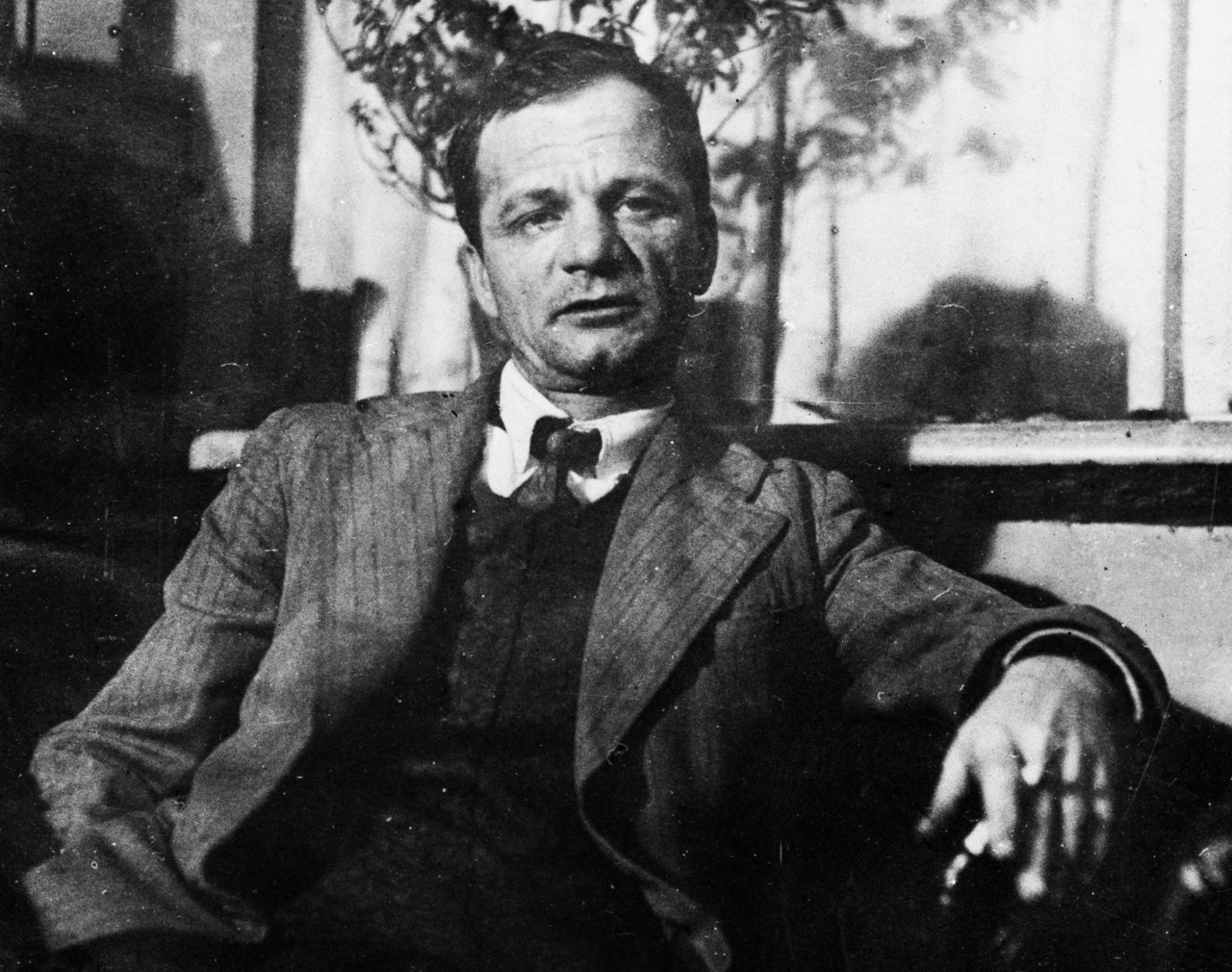
However, a brief look at Platonov's own political beliefs would allow for either interpretation. As a youth, like so many of his generation, he dashed all across the country in service of the Revolution; later, he oversaw the inhumanly paced industrialization. What it did to him - as an example, consider this scene: In Platonov's novel 'The Foundation Pit', Misha The Bear, a steelworker in a kolkhoz, wakes up in the middle of the night and rushes to the communal foundry to make more steel; he can not stop himself. He feels obligated to make steel - how can he sleep when he is needed? It's not brainwashing or force that compels him to do this; his own beliefs won't let him rest. If you really care about something, how can you rest when help is needed? But Misha is too exhausted by now to do good work, and there's not enough raw material to make good steel - it comes out brittle, botched - but nobody can hold Misha back until Misha himself collapses from exhastion, and dies. Most of Platonov's works were banned, and he was criticized by none other than Fadeev, that specter haunting Stalinist literature (fascinating biography, that man!**). For the rest of his life, plagued by poverty, he did his best to stay on the State's good side. I remember one detail in Platonov's life that immediately grabbed my attention: When his son was sentenced to death for anti-soviet activity, Platonov penned a letter in defense of his murder. I knew by then from his books what children meant to him; they were the future. To write that, about his own son: I thought I could imagine him, hunched over his desk, teeth pressed together, face and hands, burning, red, Jesus Christ. Was he so frigtened for his life, clawing for a way out, capitulating everything as the violence of his own beliefs turns on him(expected cowardice, etc), or- what if he meant it? What if he meant every single word? Ready to cast aside his own son for the one thing he believed in? Which is it? Which do you want it to be, or rather: which requres more of you?
*I am only half-joking, here. "Ordinary Fascism" by Mikhail Romm being the best exaple of this: From Wikipedia (transl.), 'There is a legend that Soviet ideologist M. A. Suslov, after watching the film before its premiere and believing to have seen parallels between the Soviet and fascist systems, summoned Romm and asked him: “Mikhail Ilyich, why do you dislike us so?”' Without passing judgement on whether such comparisons are apt, it is an intersting framework to keep in mind when analyzing Soviet dissident-adjacent media.
**Alexandr Fadeev, responsible for hounding 'unfavorable' authors into povery or death, all in the name of the State, commited suicide in 1956, after the Destruction of the Cult of Personality.